
Author: AlexSmith

What Is Instant Funding and How Does It Benefit Traders?What Is Instant Funding and How Does It Benefit Traders?
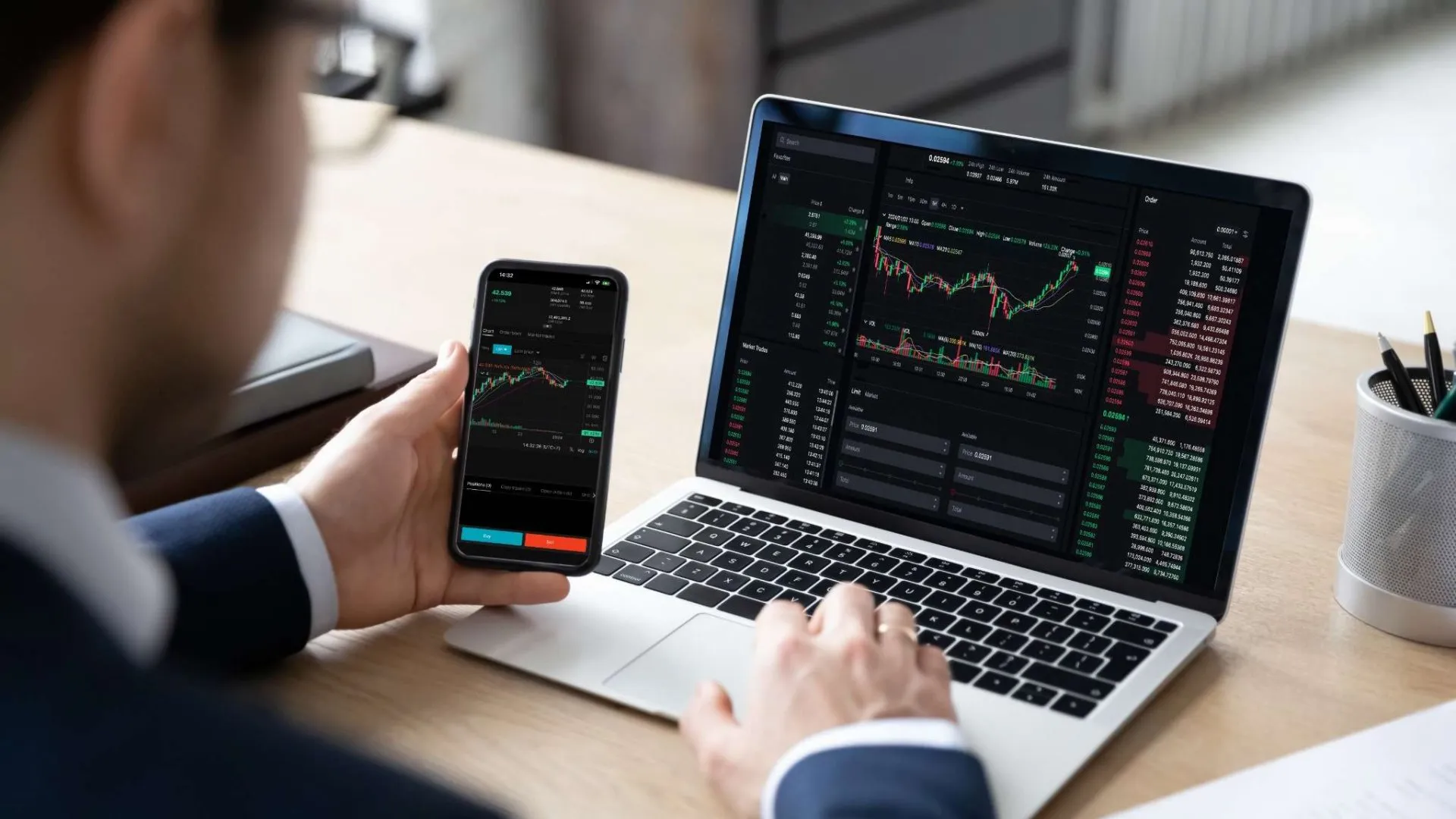
With the advent of prop trading firms, traders have the chance to benefit from greater exposure to higher capital volumes, without the need for substantial personal investment. Prop trading firms have since introduced a variety of funding options that cater to traders of all backgrounds and strategies.

Understanding Instant Funding

Instant Funding refers to a prop firm structure wherein traders get instant access to a funded trading account right after buying the program. Contrary to the usual practice of having several levels of evaluation, traders using this method would not be required to achieve certain levels of profitability.

Traders interested in instant funding must be those who believe that their strategy works, as well as those who wish to get started on trading funds accounts without going through a lot of evaluative processes. Traders will be able to trade immediately within the set parameters.

How Instant Funding Works

Traders who use Instant Funding generally have to make a single payment for getting into the funded account. The funded account will be governed by some conditions that include maximum drawdown, maximum loss per day, and sharing of the profits.

Even though traders can trade right away without going through the evaluation process, there will be certain risk rules that they have to abide by. Non-compliance will mean account suspension and even closure.

Instant Funding vs Traditional Challenges

Evaluation-based systems are common methods that many prop firms employ in order to find good traders. Examples include the One step prop firm challenge. This type of system requires traders to make a profit within certain parameters.

The main distinction between the One step prop firm challenge and Instant Funding is that the latter provides immediate access to funds. The former, on the other hand, requires traders to prove their worth before being considered for funding.

Traders that already have a tested method of making money may find it beneficial not to wait.

Faster Access to Trading Capital

The most important advantage of Instant Funding is the capacity to deal with more substantial capital from the very beginning. In this regard, many traders possess good strategies, yet they do not have enough financial means for effective trading.

The opportunity to start trading immediately makes it possible for a trader to concentrate on implementing his or her strategy instead of spending weeks and even months on assessment processes.

Reduced Evaluation Pressure

Evaluations in trading generate psychological stress. The trader is put under pressure to realize his/her profit goals fast yet stay within the drawdown levels provided.

The One Step Prop Firm evaluation process may take less time compared to several-step evaluation processes; however, it involves meeting specific goals by the trader. On the other hand, the Instant Funding method eliminates the need for traders to achieve their profit goals while under evaluation.

This reduces pressure and may assist some traders in making sound judgments.

Opportunities for Experienced Traders

Experienced traders usually like to have the advantage of flexibility and efficiency. As Instant Funding doesn’t have any evaluation procedures involved, traders can immediately use their techniques in a funded environment.

Traders who have already successfully passed through a One step prop firm test or other evaluations might like instant funding programs since they know how to manage risk and what is expected of them from their accounts.

The Importance of Risk Management

Though Instant Funding allows for quick capital availability, success can only be ensured through responsible trading. Almost all funded accounts come with certain rules regarding the maximum amount of losses allowed at any given time.

Those traders who practice good position sizing and placing stop-loss orders usually manage to keep their funded accounts for a long time. The importance of capital availability cannot be underestimated, but capital protection is what really ensures success.

Who Should Consider Instant Funding?

Instant funding options might be appropriate for:

  • Traders who have demonstrated their ability through their approach
  • Traders who need instant capital
  • Those who do not want to undergo rigorous evaluations
  • Traders who are comfortable with risk management
  • Those wishing to expand their trading fast

Beginners, on the other hand, should consider whether they are ready for this venture before opting for this option.

Conclusion

Prop firm funding options continue to change and provide traders with a lot of choices than before. Irrespective of whether a trader will follow a performance assessment approach or directly fund an account, success over the long term will only be achieved through persistence, consistency, and proper risk management.


Step-by-Step Guide to Starting Forex Trading for Beginners with Instant FundingStep-by-Step Guide to Starting Forex Trading for Beginners with Instant Funding

What is day trade: A complete guide for beginners

When traders enter currency markets, they find it difficult to understand charts, indicators, leverage, and economic news. The proper structure with appropriate methods allows all people to begin their first steps with complete assurance. People can access funding through instant funding because it eliminates the requirement for substantial personal financial investments which used to be the standard practice. This guide provides a comprehensive method for beginners who want to begin forex trading using instant funding by following protective and organized trading methods.

Step 1: Understand the Basics of Forex Trading

Before you can think about earning profits from your accounts which have been financed, review the forex trading process from its base. Traders use the forex market to buy and sell currencies through two currency pairs which include EUR/USD and GBP/JPY. The prices of products depend on three factors which include supply levels, demand levels, and economic developments, plus global news updates.

Forex trading for beginners starts with learning key concepts: 

  • Currency pairs Pips.
  • Lot sizes Leverage.
  • Margin Spread and commissions.
  • Risk-to-reward ratio.

People who want to succeed need to build their foundation because instant funding will not help them succeed. Your first investment needs to focus on education.

Step 2: Learn Technical and Fundamental Analysis

Successful traders depend on their analysis abilities which distinguish them from guesswork. The two main types available are:

  • Technical Analysis involves studying price charts through pattern recognition and support and resistance identification and indicator usage which includes RSI and moving averages.
  • Fundamental Analysis involves learning about economic events which include interest rate decisions and inflation data and employment reports.

Traders who use both methods together can make forex trading easier for themselves. Instant funding enables fast capital access but traders who analyze their trades properly will achieve better results.

Step 3: Practice on a Demo Account

Beginners should use demo accounts for practice instead of using instant funding which provides instant access to real capital. You can use demo accounts to practice your strategies without having to deal with financial stress.

Use this time to: 

  • Develop a simple trading strategy.
  • Practice risk management.
  • Understand market volatility Build discipline.

This preparation ensures that once you move to instant funding, you are not completely inexperienced.

Step 4: Choose a Reliable Instant Funding Provider

The instant funding programs available show different features from one program to another. You should investigate the details about your selected provider after you complete your market research. Look at:

  • Profit-sharing percentage.
  • Maximum drawdown limits.
  • Daily loss rules.
  • Scaling opportunities Withdrawal policies.

Forex trading for beginners requires a structured environment. A reputable instant funding program will clearly define rules and provide transparency. The terms and conditions document contains important information which you must read completely to prevent future unexpected issues.

Step 5: Understand the Rules of Your Funded Account

After you obtain approval for instant funding your obligations increase. Funded accounts follow strict risk management rules which account holders must abide by. These rules may include:

  • Daily drawdown limits.
  • Overall maximum loss limits.
  • Position size restrictions. 
  • News trading rules.

Many beginners fail not because of poor strategy but because they violate rules. The funded account must be treated as your job responsibility not as a chance for gambling.

Step 6: Create a Simple Trading Plan

A trading plan is essential in forex trading for beginners. Your plan should include:

  • Entry criteria Exit strategy.
  • Stop-loss placement.
  • Risk percentage per trade.
  • Maximum trades per day.

The importance of discipline in instant funding surpasses the importance of aggressive trading. Beginners should take risk between 1 and 2 percent whenever they make trades. People should focus on maintaining a consistent work routine instead of trying to achieve immediate substantial profits.

Step 7: Focus on Risk Management

Long-term success requires you to build your risk management system. Every trader experiences losing trades. The main difference between professional traders and other traders lies in their ability to manage their losses.

Key principles include: 

  • Always use a stop-loss. 
  • Avoid overleveraging.
  • Do not do revenge trading.
  • Stick to your daily risk limit.

Your job involves protecting the capital which instant funding provides to you. Your ability to control risks determines how long you will stay in the game while you achieve stable progress.

Step 8: Manage Emotions and Psychology

The mind functions as a major trading element which exists beyond the trading charts. Fear and greed are common challenges in forex trading for beginners. People need to control their emotions with instant funding because they handle more money than they have personally.

Avoid: 

  • Overtrading after a win.
  • Doubling lot sizes after a loss.
  • Ignoring your strategy.

The combination of patience and discipline leads to stable outcomes which become evident over extended periods.

Step 9: Track and Review Your Performance

The trading journal records your trading activities through these categories: 

  • Entry and exit points.
  • Reasons for taking the trade. 
  • Outcome Lessons learned.

Your trade analysis process helps you detect repeated patterns together with your trading errors. Traders who handle their own trading behavior through analysis will see significant improvements in their forex trading results.

Step 10: Scale Gradually and Stay Consistent

Traders who demonstrate profitability and discipline can access scaling options through many instant funding programs. Scaling needs to happen at a slow pace.

Focus on: 

  • Maintaining consistent returns.
  • Following rules strictly.
  • Protecting capital.
  • Improving strategy accuracy.

Success in forex trading for beginners does not happen overnight. The instant funding process provides users with quick access to actual market experience, yet users who want to achieve lasting results must remain consistent in their efforts.

Final Thoughts

The correct approach makes your first steps into forex trading for beginners become exciting and fulfilling. Instant funding has revolutionized access to the forex market by removing major capital barriers and offering immediate trading opportunities. The process of gaining capital does not suffice to establish your business. The essential elements for success remain education, strategy development, product discipline, emotional regulation. The beginners can use instant funding which supports their trading activities through this step-by-step guide. The process of instant funding develops a beginner into an expert forex trader who moves with confidence and expertise through time.

Prop Firm Challenge & Best Prop Firm in UK: What UK-Focused Evaluation Models Teach Traders About Passing Challenges FasterProp Firm Challenge & Best Prop Firm in UK: What UK-Focused Evaluation Models Teach Traders About Passing Challenges Faster

Benefits and Risks of Using AI in Trading: A robotic hand interacting with a forex trading chart on a computer screen, symbolizing AI-driven trading strategies.

The trading industry has undergone a major transformation due to prop firm challenge models which provide talented traders with access to large funds while protecting their personal financial assets. For traders in the UK, understanding the nuances of the best prop firm in the UK and their unique evaluation models is essential for navigating these challenges successfully. This article investigates how prop firm challenges operate and what evaluation standards top UK firms use to assess traders who want to complete their challenges faster.

Understanding the Prop Firm Challenge

A prop firm challenge is essentially a trading evaluation designed to identify skilled traders who can manage capital responsibly and profitably. Prop firms provide capital to qualified traders who want to engage in trading because these firms operate differently from traditional trading systems which require traders to use their personal funds for trading activities. Traders must demonstrate their ability to generate profits while following defined risk management guidelines before they receive access to the trading capital.

The challenge requires participants to achieve specific profit targets during a designated time frame while they must also follow drawdown restrictions and all other established risk management rules. The challenge tests a trader's capacity to sustain profit generation through extended time periods without causing any major financial losses which would put the company's capital at risk.

Key Features of the Best Prop Firm in UK

The top prop firm in the UK operates evaluation models which conduct assessments in an open and equitable manner while providing traders with comprehensive assistance to help them succeed. The top prop firms in the UK develop their assessment challenges according to the particular market movements and operational times and trading assets which exist in their specific regions.

The main characteristic which defines leading UK prop firms operates as their dedication to educating traders while bringing development opportunities. They typically offer educational materials together with coaching and assessment assistance throughout their evaluation period. The method enables traders to identify their weaknesses while developing strategies which help them achieve challenge requirements.

The top UK prop firms establish adaptive trading regulations which permit traders to use their preferred trading methods which include day trading and swing trading and scalping. Traders can use their individual strengths through this flexible system which eliminates the need for them to follow fixed trading routines.

The UK evaluation systems show traders how to complete their challenges more quickly

Effective risk management stands as the primary requirement for success

The evaluation systems used by UK prop firms require traders to demonstrate their ability to manage risks through strict evaluation practices which they must follow throughout their assessment period. Traders discover that their challenge attempt ends when they exceed drawdown limits even for a brief period. The lesson teaches traders to establish capital protection as their highest priority while they should pursue steady earnings through minimal risk methods instead of taking substantial risks to achieve substantial profits.

Traders can maintain their risk exposure within safe limits by implementing strict stop-loss rules together with effective position sizing methods. Early challenge participants who learn this lesson have better chances of success because it leads to funded trader achievement.

Adaptability to Market Conditions

The markets in the UK demonstrate distinct market patterns which display specific volatility trends that stem from regional economic news and European market hours and geopolitical happenings. The Best prop firm in the UK creates their evaluation tests to match actual market conditions, which leads traders to modify their trading methods in response to changing market conditions.

Traders who study and respond to these market-specific signals can improve their performance significantly. The ability to trade actively during the London session overlaps while decreasing exposure to crucial economic releases creates a vital skill for passing or failing the challenge.

Discipline Over Impulse

Traders who participate in the prop firm challenge learn through the experience which shows them that discipline represents an essential skill needed to follow rules while avoiding unplanned trading. Many traders entering the challenge are tempted to overtrade or deviate from their plan in pursuit of quick profits.

The evaluation systems used by UK prop firms assess traders who maintain consistent trading patterns while controlling their emotional states. The development of a systematic trading method together with trade documentation and performance evaluation through critical analysis enables traders to reach their passing point because this method helps them avoid typical behavioral traps.

Leveraging Technology and Analytics

The top UK prop firms teach their traders how to improve their trading results through the application of technology and analytics. The proprietary platforms come with built-in systems which enable users to monitor risks in real-time and analyze their trades and view their performance metrics through dashboards.

Traders learn to use these tools for finding their strategy weaknesses which they need to fix. The system generates automated alerts which inform traders about drawdown limit violations and position size limit breaches, thus providing them with instant feedback that enables them to steer clear of challenge violations while enhancing their performance.

Importance of Psychological Resilience

Traders must demonstrate psychological strength to complete prop firm challenges while also showing their trading abilities. UK firms often incorporate mental coaching or resources to help traders manage stress and maintain confidence throughout the evaluation period. The best prop firms in the UK understand that traders who can stay calm under pressure and recover quickly from setbacks are more likely to succeed. The emphasis on mental strength teaches traders to develop the proper mindset which helps them avoid making decisions based on their emotional state. 

How to Choose the Best Prop Firm in UK for Your Challenge

Successful challenge execution requires traders to select their ideal UK prop firm from available options. Traders should look for firms that offer transparent rules, reasonable profit targets, and fair fee structures. Equally important is the firm’s reputation and track record for funding traders promptly after challenge completion. 

UK-based traders can enhance their trading capacity through firms that give them access to local markets and instruments which allow them to use their market knowledge. Firms that provide educational support, along with community engagement, create a learning environment which helps students to advance quickly. 

Conclusion

More traders are now entering the market for funded trading opportunities because the UK prop firm challenge system is undergoing rapid changes. The best prop firm in the UK offers its unique evaluation system which assesses traders through four core competencies: risk management, discipline, adaptability, and psychological resilience. UK-focused challenges teach traders valuable lessons that can accelerate their path to passing these challenges faster. 


The Importance of Data in Strategy DevelopmentThe Importance of Data in Strategy Development

Stock Trading & Professional Awk Stock

Data is increasingly the foundation of good strategy formulation in today's fast-moving financial world.  Success is benchmarked by the capacity to read and act on data-driven analysis, whether it is managing risk, assessing investment opportunities, or formulating a trading approach.  All decision-making, whether short-term market entries or long-term strategic asset allocation, is data-driven, and data supports traders and institutions in properly navigating uncertainty. Including detailed data research in strategy formation is critical to people who trade through platforms like MetaTrader 5 (MT5) and are part of paid trading programs from the best prop firm.

 Data's Key Role in Strategic Decision-Making

All effective strategies start with timely, pertinent, and reliable information.  Numerous variables, such as macroeconomic variables, geopolitical occurrences, liquidity constraints, and investor psychology, all have their impact on the way financial markets behave as complicated systems.  Data-based strategies present an authoritative set of parameters for measuring these variables, but traders are exposed to unexpected risks when they make their moves on the basis of nothing more than gut or isolated indications.

By converting raw market data to actionable intelligence, information refines decision-making.  Traders are able to make optimal entry and exit points, predict trends, and find correlations by conducting extensive analysis.  Historical information in particular, particularly, provides a first baseline for backtesting approaches by illuminating the behavior of particular approaches under varying market conditions.  By ensuring that approaches are rooted in quantifiable facts rather than speculation, this empirical validation minimizes reliance on assumptions.

Data also promotes consistency.  Emotions tend to impair judgment in moments of tension, resulting in impulsive decisions that negatively impact output.  Traders stay disciplined and follow well-defined targets with their actions by following data-based rules and KPIs.  This systematic decision-making is a necessity in institutional and retail settings where accuracy and consistency are the top priorities.

Using MT5 Indicators to Trade Based on Data

Sophisticated analysis tools like mt5 indicators are used to improve data analysis on sophisticated platforms like MetaTrader 5.  To help traders interpret market dynamics in real time, these indicators translate price action, volume, volatility, and momentum into understandable visual and numeric signals.  They provide more insight than simple price watching, and thus are vital parts of any data-based trading strategy.

Technical indicators like moving averages, Relative Strength Index (RSI), and Bollinger Bands assist traders in identifying trend directions, changes in momentum, and overbought or oversold conditions.  Advanced custom mt5 indicators, on the other hand, feature multi-timeframe analysis and sophisticated algorithms to provide even better prediction.  Traders can enhance accuracy in their approaches, minimize false positives, and verify signals by blending a mix of indicators.

Individual trading decisions are only one component of the data integration made possible by MT5.  Backtesting and optimization are made possible through historical indicator data, and this enables traders to hone their strategies against actual performance rather than hypothesis.  Developing stable trading systems that adjust to changing market conditions requires an iterative process of testing, analysis, and refinement on the basis of quantitative feedback.

It also facilitates indication management based on rational criteria.  To link exposure to risk with the state of the markets, volatility-based methods, for example, contribute to setting optimal position size as well as stop-loss levels.  Data-driven, rule-based behavior allows for maximum potential for stable returns while boosting capital preservation.

 The Foundation of Competitive Advantage: Data

In an economy where information moves at record pace, data-driven solutions are a significant source of competitive edge. Those firms and traders who use enormous quantities of data such as price history, macroeconomic information, and order flow analysis are better placed to obtain insights that the remainder are not in a position to attain by using mere conventional methods. Long-term profitability tends to differentiate itself from poor performance through the capacity to process, examine, and respond to information faster and more accurately than competitors. The applicability of information is much greater to participants in supported trading programs.  

Traders who exhibit disciplined, data-based methods are rewarded in the greatest prop firm arrangements.  These firms invest huge sums of money on individuals who churn out consistent profits while being careful with risk, a skill that is rooted in sound data analysis. Prop firms themselves also utilize quite a bit of data in their own research, researching traders' risk profiles, behavioral tendencies, and performance criteria. Data-driven traders are more likely to meet these firms' performance criteria, which increases their chances of getting capital and building long-term relationships.

Data informs more broad strategy considerations like exposure management, asset correlation studies, and diversification across the portfolio beyond the trades.  These aspects are essential in promoting resilience and stability, especially when there is increased market stress or volatility.  From individual trades to net-of-trade portfolio adjustments, data-driven considerations guarantee that every decision supports the strategy's long-term goals.

Supplying Data to Processes for Strategic Development

Developing an effective strategy is more than just the amassing of data; it is also a matter of systematically entering that data into all stages of the process.  Identifying tangible objectives, including time parameters, return targets, and risk tolerance, and answering what kind of data are most applicable to each of those objectives are the first stages in doing so.  Based on the focus of the strategy, market data, sentiment research, macroeconomy indicators, and sector-specific ones have different functions.

Converting unstructured data to structured insights is the second step. Massive volumes of data are transformed into useful, meaningful findings by statistical analysis, technical modeling, and simple inspection. Regression analysis, for instance, may illustrate how asset classes correlate with one another, while volatility studies tell us about the amount of risk to place. Strategies are likely to take into account measurable trends and situational market factors when quantitative techniques and qualitative judgment are merged. A key component of data integration is testing and validation.  While forward testing in real or simulated environments determines a strategy's strength in existing markets, historical backtesting analyzes how a strategy might have performed in the past.  

To ensure that the final method is theoretically valid as well as easily executable, both processes supply feedback for improvement. Regular checking is required after installation.  Strategies have to adjust with changing markets.  Strategic relevance is maintained and timely modifications are enabled by regular check-up of the performance metrics, drawdowns, and shifting correlations.  This feedback cycle of data gathering, analysis, implementation, and adaptation is the foundation of long-term trading success.

Future Prospects: Data as a Driver for Innovation

The use of data in strategic planning will increase only more so as financial markets become more sophisticated.  Computing capacity and analytic methods are producing more profound, faster, and more nuanced insights than ever before.  In order to enhance their strategic lead even more, institutional investors and proprietary trading shops are using alternative data sources more and more in making decisions, including sentiment analytics, satellite imagery, and transaction-level microdata.

To retail traders, this evolution means the significance of understanding data analysis and converting it into daily operations. Those platforms that provide state-of-the-art mt5 indicators and enhanced analytics will keep the frontiers for this revolution open, enabling the traders to come up with strategies with more precision and versatility.

In this regard, prospective professionals applying to work with the top prop firm will be better off highlighting their proficiency in data-driven trading techniques to ensure that their skill sets are keeping up with the direction the industry is going. 

Conclusion

Finally, the next phase of money-making decisions will be determined by how confluently analytical tools, strategic vision, and data availability come together.

Those who embrace this reality will not only navigate markets better, but create the evolving topography of investing and trading.

In conclusion Good decision-making is data-driven now, rather than using it as an afterthought to strategy creation.  Data powers all areas of contemporary trading methods, from achieving the stringent performance metrics of top prop business to boosting technical analysis through mt5 indicators.  It is essential in today's competitive financial marketplace because of its capability to summarize intricate ideas, minimize uncertainty, and deliver valid output.

Those who can utilize data as an asset rather than just information will have dominance over trade in the future.  The incorporation of data-driven processes at every phase of strategy creation positions traders and institutions to excel in the long term within a market that is on the rise in its complexity.


How to Invest in S&P 500 and Use Gold as a Diversification ToolHow to Invest in S&P 500 and Use Gold as a Diversification Tool

Trading Platforms: Features, Types, and Top Examples

Finding the best returns is only one aspect of investment; Another balance between development and safety is creating a balance. Gold and S&P 500 are two of the most demanded assets for long -term investors. The S&P 500 is a benchmark for the stock market performance as it is a collection of largest American corporations. In contrast, Gold has long been considered as a safe-heaven investment that protects money in uncertain economic times. Investors can create a more balanced portfolio by learning ways on how to invest in S&P 500 and combine it with gold.

Why Invest in the S&P 500

Most people agree that one of the best ways to get exposure in the US stock market is to invest in the S & P 500 index. Those who invest in S&P 500 gain access to various groups of businesses in industries such as technology, healthcare, finance and energy. The index has historically produced solid long -term returns, average between 7 and 10% per year after inflation. The S&P 500 is also available to novice investors through the exchange-traded fund (ETF) and index funds, one of the simplest ways to trade stock.

How to Invest in the S&P 500

The most popular ways to invest in S&P500 are through index funds and exchange-traded funds (ETFs). For example, a brokerage account can be used to purchase an S&P 500 ETF, which tracks the performance of the index. Mutual funds that mimic the index are also popular among investors. With these options, investors can start with a nominal amount, avail automatic diversification, and keep the expenses minimum. This is simple: open a brokerage account, see the S&P500 fund, and start investing on a one -time payment or recurring basis.

The Role of Gold in a Portfolio

Despite its ability to grow, S&P 500 is unsafe for inflation pressure, market volatility and recession. Benefits of sleeping at this point. In the past, gold has served as a store of value, which is well caught in the period of economic disturbance and exchange rate. The gold market is a powerful defense against recession as it is not correlated with corporate income such as interest rate policies or stock. Gold helps investors to keep their portfolio balanced by reducing risk.

Gold vs S&P 500 Performance

Gold vs S&P 500 often move against each other. Gold can perform poorly in a rapidly growing stock market, but it usually increases during the market crisis as investors seek security. For example, gold has performed better than shares during inflation time and financial recession. Investors who want to generate stable returns over time have to understand this inverse relationship. By investing in both, one can avail the protective properties of gold and the growth capacity of shares.

Using Gold to Diversify S&P 500 Investments

Using gold as a diversification tool is the most effective way to combine these two assets. A part of an investor's money, usually between 5% and 15%, can be allocated for gold if most of their money is in S&P 500. This allocation comes in contact with the growth of the stock market, reducing the loss during recession. On the basis of the priority of the investor, the gold mining can be purchased through the company's stock, gold ETF or physical bullion. The mystery is to keep things in balance so that gold increases the growth capacity of S&P 500 without reducing total returns.

Conclusion

Due to its historical development and diversification in important American companies, learning to invest in S&P500 is one of the best ways to deposit long -term money. Gold also acts as an important defense against uncertainty, providing protection in the time of market instability. Investors can achieve both stability and growth by combining both, guaranteeing that their portfolio will catch well during various economic cycles. The approach is straightforward but effective: for long -term success, be varied, grow with S&P 500, and protect from sleeping.